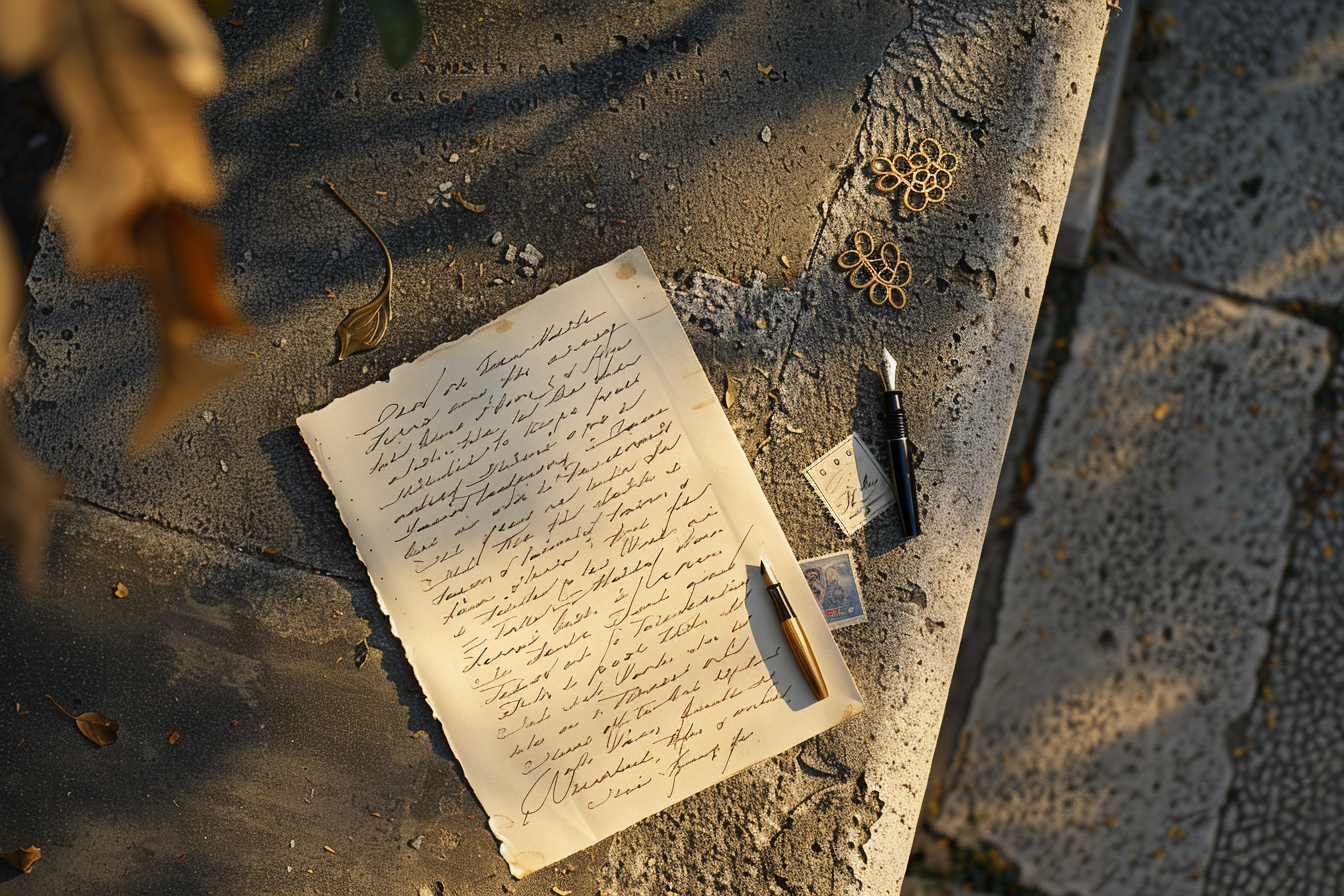
Searches for “cute stamps” are up 105%. “Hand written letters” are up 45%. “Penpal letters,” up 35%. Those are Pinterest’s own numbers for 2026, and they describe people who have same-day delivery, five messaging apps, and the ability to reach anyone on earth in seconds — choosing stamps anyway.
The interesting question isn’t whether letter-writing is back. The data settles that. It’s why — and the most convincing answer has less to do with nostalgia than with what a letter can prove.
Key takeaways
- Pinterest named Pen Pals an official 2026 trend — “cute stamps” +105%, “hand written letters” +45%
- The driver isn’t nostalgia. It’s that a handwritten letter is one of the few objects that cannot be generated
- You need four things to start, and only one of them costs real money
- Write worse letters. The pressure to be profound is what stops most people from sending anything at all
Why are handwritten letters coming back in 2026?
The convenient explanation is nostalgia — a soft-focus longing for a slower decade. It’s also mostly wrong. The people driving this are in their twenties and thirties. Most of them have no meaningful memory of a time before email.
The sharper explanation is scarcity. As feeds fill with content that may or may not have been made by a person, the objects that can’t be produced at scale quietly gain value. A letter in someone’s actual handwriting, with their pressure and their crossings-out, is unforgeable in a way almost nothing else in your day is.
A letter is permanent and impossible to scroll past. It sits on the kitchen counter. It gets tucked into a book. It gets found again three years later and it still means something.
That’s the whole mechanism. Not sentimentality — evidence. A letter proves someone spent twenty minutes they could not get back on you specifically.
What do you actually need to start writing letters?
Less than the aesthetic suggests. The stationery world would like this to be an expensive hobby. It isn’t, and treating it as one is the fastest way to never begin.
- Paper that takes ink without bleeding. This is the only place where quality genuinely changes the experience. Anything labelled for fountain pens will do, even cheaply.
- One pen you like holding. Not a collection. One. A fountain pen if the ritual appeals; a decent gel pen if it doesn’t.
- Stamps. Bought in a book, kept with the paper, so the last step never becomes the obstacle.
- A reason. The hardest ingredient. See below.
That’s the entire kit. Everything past this — wax seals, blotters, a dedicated desk — is pleasure, not requirement.
Shop letter-writing paper → — look for fountain-pen-friendly weight, 90gsm or above.
Shop a starter fountain pen → — a modest steel-nib pen writes as pleasantly as an expensive one.
Shop a wax seal kit → — entirely unnecessary, and the part everyone ends up loving.
What do you write about when nothing has happened?
This is where most attempts die. People sit down intending to write something worth keeping, produce two stilted paragraphs about the weather, and quietly stop.
The fix is counterintuitive: write worse letters. The form doesn’t reward profundity. It rewards specificity and frequency.
- What you ate, described properly. Food is the most reliable subject in correspondence and always has been.
- A small grievance, taken seriously. Complaints are more intimate than compliments.
- Something you saw on the way somewhere. Not the destination — the walk.
- A question you actually want answered. It gives the other person their opening line.
- What you’re reading, and whether it’s any good. Half of all correspondence in history is essentially a book review.
The letter you send this week is worth more than the better one you don’t finish this month.
The turn: what the trend gets wrong
There is a version of this revival that is entirely aesthetic — the flat-lay of pristine stationery, the wax seal photographed and never posted, the subscription box of other people’s handwriting. That version is a purchase, not a practice.
It’s worth being honest that the mail clubs and stationery hauls now attached to this trend are, structurally, the same content economy the letter was supposed to be an escape from. If the paper gets photographed more often than it gets posted, the revival has been absorbed rather than joined.
THE GILT take: the entire value here is in the friction. It’s slow, it costs a stamp, and it can’t be automated — which is precisely why it registers as care. Buy the cheap paper. Send the mediocre letter. The object was never the point; the twenty minutes were.
What do you write to different people?
The blank page is easier when you accept that a letter to your grandmother and a letter to a friend you drink with are not the same document. Match the register and the words arrive faster.
| Who | What works | What to avoid |
|---|---|---|
| An old friend | Specific memory, then what you’re doing now. Ask one real question. | A summary of the years since you spoke — it reads like a CV. |
| A grandparent or older relative | Daily detail, described slowly. Food, weather, what you can see. | Assuming they want advice or technology talk. |
| Someone you’re courting | Restraint. One observation about them, precisely made. | Declarations. The form is already intimate; you don’t need to add pressure. |
| A new pen pal | Who you are in five concrete facts, and two questions back. | Trying to be interesting. Being specific is what reads as interesting. |
| Someone grieving | Say the person’s name. Share one memory of them. | “Let me know if you need anything” — it puts the work on them. |
The pattern across all five: concrete beats clever, and a question beats a conclusion. A letter that ends with something to answer tends to get answered.
How long does writing a letter actually take?
Less than people expect, and that expectation is most of what stops them. A page of ordinary correspondence — the kind that gets kept — takes about fifteen minutes.
The friction sits at the ends, not the middle: finding paper, and finding a postbox. Both are solved once, not repeatedly. Keep stamps with the paper. Learn where your nearest postbox is and what time it’s collected. After that the only remaining step is writing, which was never the hard part.
A note on posting abroad
International correspondence is the part most people get wrong once and then abandon. Airmail rates differ from domestic, weight limits arrive faster than you’d think, and a rigid wax seal can attract a surcharge or simply be crushed in sorting.
If you’re writing overseas: keep to a single sheet of lightweight paper, use the flattest seal you own or skip it, and check the current rate at the counter rather than assuming. One correctly-franked letter that arrives beats a beautiful one returned six weeks later.
Is a letter-writing set worth buying?
Usually not as a first purchase. Boxed sets tend to price the presentation rather than the paper, and they lock you into one format before you know what you like writing on.
The better sequence is to buy a modest pad, use it entirely, and notice what irritated you — bleed-through, a size that constrained you, paper too smooth for your pen. Then buy deliberately. The second purchase is nearly always the right one; the first rarely is.
- Buy first: a pad of fountain-pen-friendly paper and a book of stamps.
- Buy second, if it still appeals: a pen you chose rather than inherited.
- Buy last, purely for pleasure: wax, a seal, coloured ink.
What to actually buy, in the order it makes sense
The list above says you need four things and only one of them costs real money. Here is that advice with specific pieces attached — kept in the same order, because buying a beautiful pen before you own paper that takes ink is how people end up with an expensive object and no correspondence.
Buy first: paper that takes ink
This is the only place where quality genuinely changes the experience, and it is also the cheapest part of the kit.

Midori stationery paper, unruled — around $11.50. Made specifically for letters written with a fountain pen: smooth enough that the nib doesn’t catch, dense enough that ink doesn’t feather or ghost through to the back. Unruled, which sounds intimidating and isn’t — handwriting finds its own line within about half a page.
Shop the Midori letter paper →

Nakabayashi YU-SARI A5 notebook, plain. The companion purchase, and the one that makes you better at this: YU-SARI paper is engineered so fountain-pen ink dries quickly without bleeding. Draft in it, work out what you actually want to say, then write the real thing on the Midori.
Buy second: one pen you like holding
Not a collection. One. The article’s point stands — a modest steel nib writes as pleasantly as an expensive gold one, and the pen you reach for is the one that feels right in the hand.

Scriveiner Midnight Blue, medium nib — around $48. A German Schmidt nib in a properly weighted lacquered body. This is the sweet spot for a first real pen: substantial enough that writing feels like an occasion, cheap enough that you won’t be precious about carrying it.
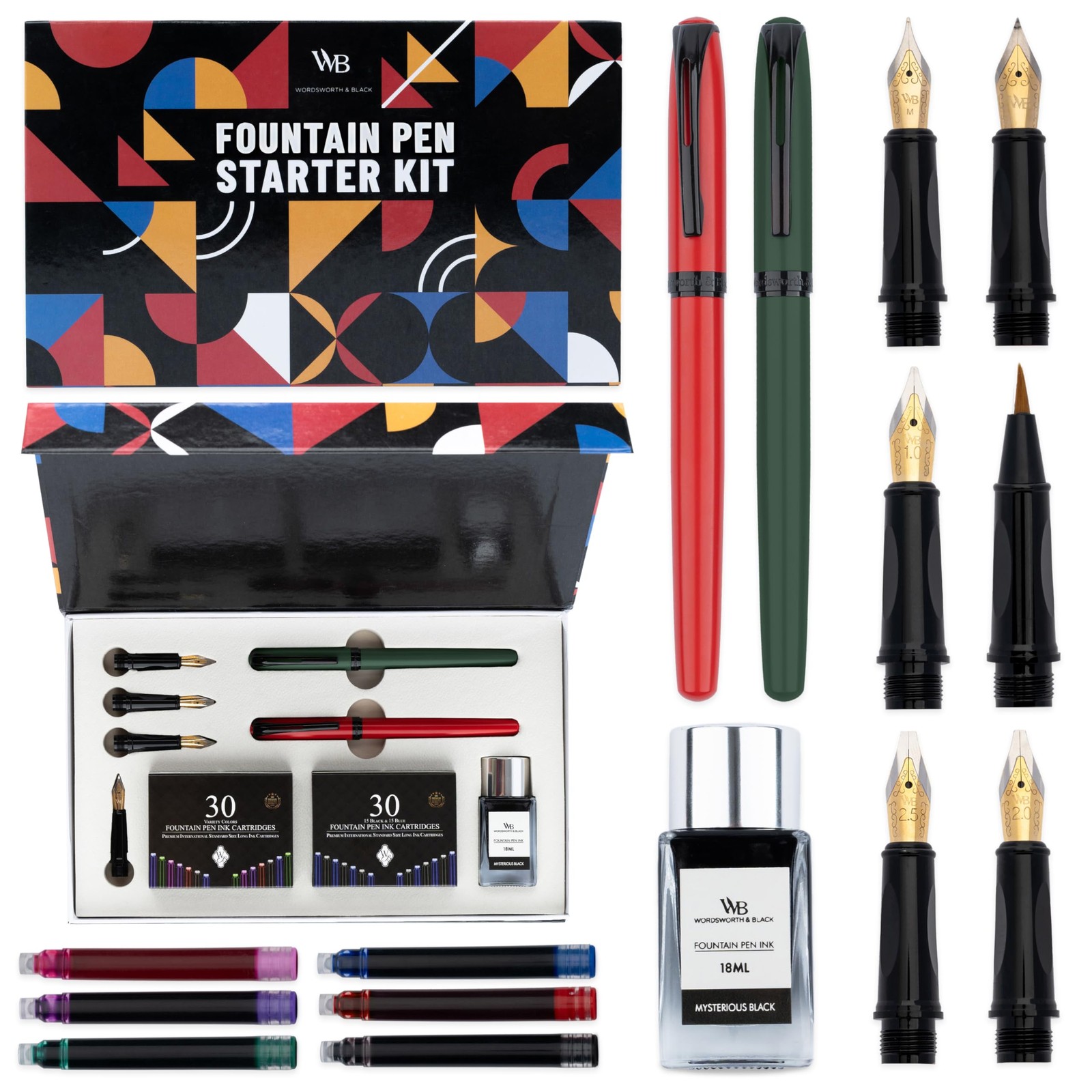
Wordsworth & Black set in green, two pens plus an 18ml ink bottle — around $72. The better option if you suspect you’ll want to write in more than one colour, or if you want a second pen to leave somewhere else. Bottled ink rather than cartridges also works out considerably cheaper per letter.
Buy last, purely for pleasure
Everything in this tier is unnecessary, which is the point. Buy it once the habit exists, not in the hope that it will create one.

ARTEX x National Palace Museum Gold Lotus pen and marble stand — around $145. A solid metal body with a German Schmidt fine nib, sitting on a natural marble stand. It is a desk object as much as a writing instrument, and the lotus motif is exactly the kind of ornament-on-structure the Gilt tends to argue for.
Shop the ARTEX Gold Lotus set →
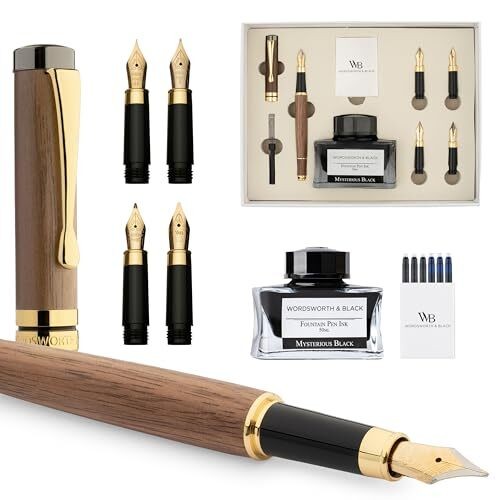
Wordsworth & Black gift set with bottle and six cartridges — around $213. The full presentation kit, and the obvious answer if you’re buying this for somebody else rather than yourself. Japanese-made inks, a case, and enough cartridges that the recipient never has an excuse about supplies.
Prices were correct on 6 August 2026 and will change. We earn a commission on purchases made through these links, at no additional cost to you.
Frequently asked questions
Is letter writing actually trending, or is it a niche aesthetic?
Pinterest named Pen Pals one of its official 2026 trends, with searches for “cute stamps” up 105%, “hand written letters” up 45%, and “penpal letters” up 35%. That’s platform-wide search behaviour rather than a single community.
Do I need a fountain pen to write letters?
No. A pen you enjoy holding matters more than the mechanism. Fountain pens are part of the pleasure for some people and an obstacle for others — if it would delay you starting, use a gel pen.
How do I find someone to write to?
Start with someone you already know and would otherwise text. The pen-pal-matching route works, but the easiest first letter is to a friend who will be startled and delighted to receive one.
How often should I write?
Often enough that it stays casual. Correspondents who write monthly tend to keep going; those who wait for something significant to report usually stop after two letters.
Disclosure: This post contains affiliate links. If you buy through them, THE GILT may earn a commission at no extra cost to you. We only recommend products that meet our evidence and usefulness standards.
Leave a Reply