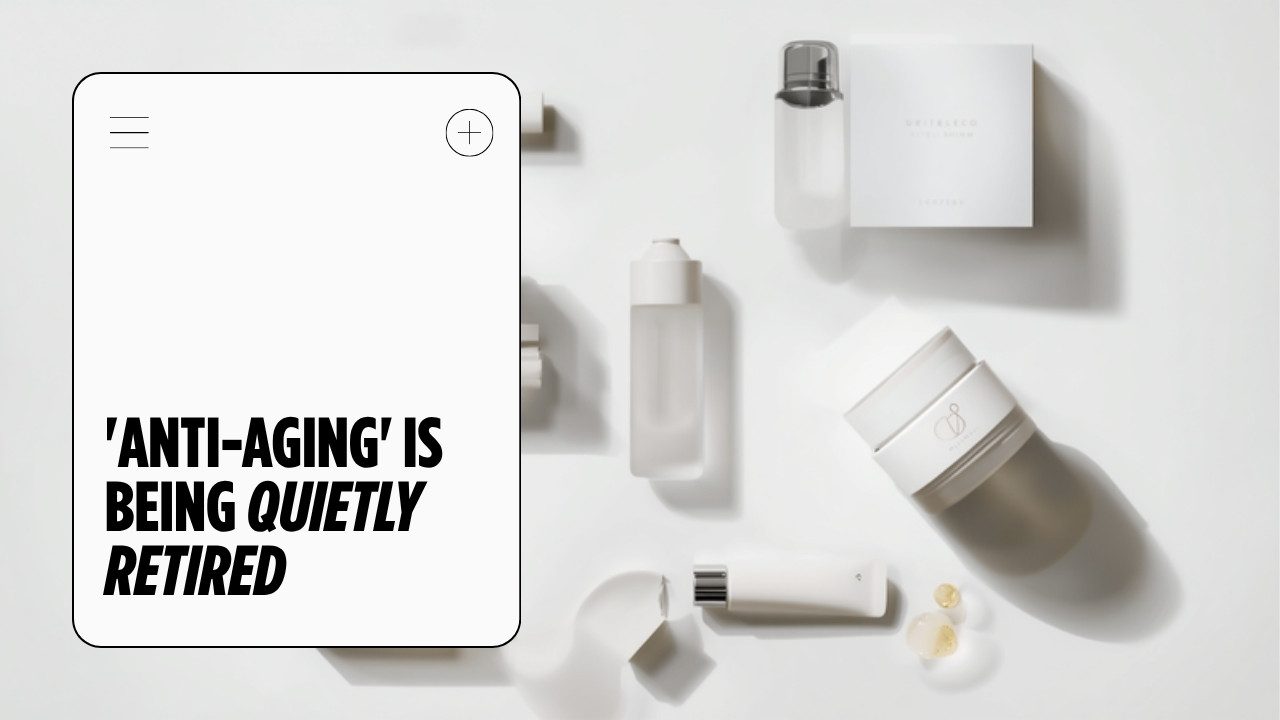
The phrase “anti-aging” is disappearing from product packaging and marketing decks across the beauty industry. In its place: “longevity.” The change isn’t cosmetic. It marks a shift from products promising to reverse visible aging to a category built around supporting skin health over time — and it’s being driven, in large part, by what women over 40 are actually asking for.
Key takeaways
- 65% of women aged 35–54 now scrutinize ingredient lists before buying skincare — higher than any other age bracket
- Alloy, Hone Health, and L’Oréal have all repositioned away from “anti-aging” language in the last 12 months
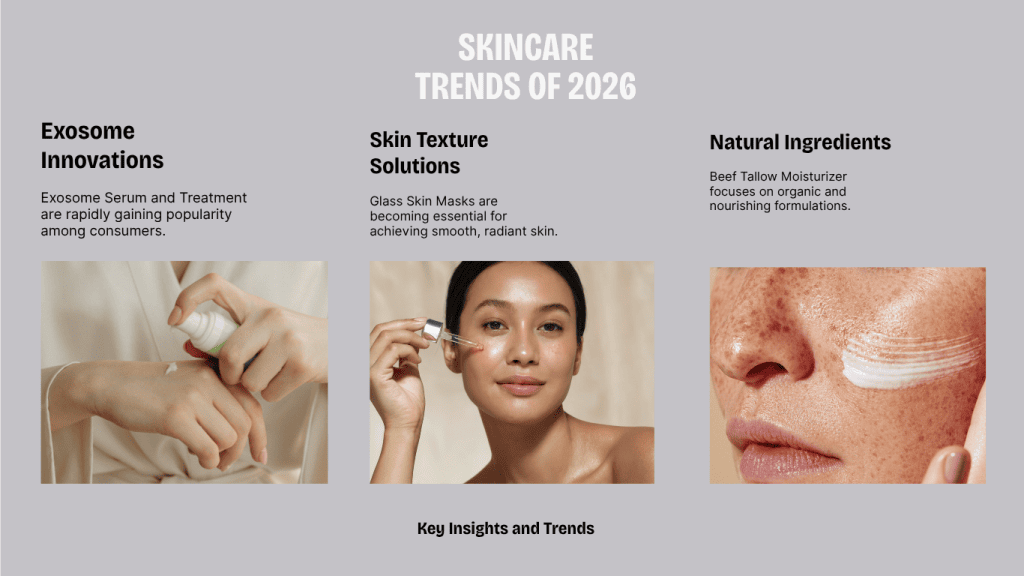
- Exosome Serum is the fastest-growing skincare search term of 2026, up 557% year-over-year
- The real formulation shift underneath the rebrand: PDRN, exosomes, NAD, ceramides, hypochlorous acid
- The test that matters: does the brand disclose concentration and sourcing, or just the ingredient name?
Why this actually matters for you
It’s easy to read a rebrand as marketing noise. This one isn’t, and here’s the practical difference: “anti-aging” products were built around a single promise — make the signs of aging less visible, temporarily, on the surface. A retinol cream smooths a wrinkle. A collagen serum plumps skin for a few hours. Neither changes what’s happening underneath, and neither claim requires the brand to show you evidence beyond a before-and-after photo.
“Longevity” products are being built around a different, testable claim: supporting the skin’s actual repair and regeneration processes, not just masking what’s visible. That’s a claim that can be measured — barrier function, cellular turnover, wound-healing markers — which is exactly why the ingredient list matters more now than it used to. You’re no longer just buying a texture. You’re buying a mechanism, and mechanisms can be checked.
How far the science has actually come
Ten years ago, the most advanced ingredient on a typical anti-aging shelf was retinol — effective, but purely corrective, and often irritating enough that a third of users couldn’t tolerate a full routine. The formulas after that added peptides, which signal skin cells to behave a certain way but don’t repair tissue directly.
What’s changed is the source material. PDRN (polydeoxyribonucleotide) and exosomes were developed first in wound-healing and regenerative medicine — treating burns, surgical scars, tissue damage — before skincare formulators adapted them for cosmetic use. That lineage matters: these ingredients weren’t invented to sell jars, they were borrowed from a field that had to prove they worked on real injuries first. NAD, similarly, comes out of cellular-aging research, not a beauty lab. That’s the “how far we’ve come” story in one line: the science moved from covering damage to studying repair, and skincare followed it there several years later than medicine did.
The data behind the rebrand
65% of women aged 35–54 now scrutinize ingredient lists before buying skincare, according to 2026 industry research from Glimpse — more than any other age bracket. Brands are responding in real time. In July 2025, Alloy launched its M4 line explicitly as “menopause performance skincare” rather than an anti-aging product. In January 2026, Hone Health ran a campaign called “Death To Midlife,” directly challenging the language the industry has used to talk about aging skin. L’Oréal followed with its first longevity-focused range, developed in partnership with Swiss biotech firm Timeline.
Search behavior backs up the shift in language. Glimpse’s 2026 trend data ranks Exosome Serum as the single fastest-growing skincare search term, up 557% year-over-year — ahead of every other category tracked, including viral formats like glass-skin masks (+253%) and scar-repair tape (+171%). Search interest is a leading indicator: consumers were asking for regenerative ingredients before most mainstream brands had reformulated to offer them.
Which brands are actually using this — and doing it well
Naming the ingredient is easy. Naming who’s actually formulating with it responsibly is the more useful test:
- Alloy (M4 line) — built specifically around perimenopause and menopause skin chemistry rather than a general “mature skin” claim; the positioning itself (performance, not concealment) is the product’s main differentiator.
- L’Oréal x Timeline — the first mass-beauty longevity range developed directly with a cellular-longevity biotech firm rather than an in-house lab, which is a meaningfully different R&D relationship than most drugstore anti-aging lines.
- Fièra — formulates and tests specifically with women in their 40s and 60s, rather than testing on younger panels and marketing to an older one.
- True Botanical — MADE SAFE®-certified against roughly 6,500 flagged chemicals, which is the closest thing skincare has to third-party-verified transparency rather than a brand’s own claim.
- Stripes (founded by Naomi Watts) — prescription-only, physician-reviewed menopause formulations; worth watching as an example of the medical and cosmetic sides of this shift converging.
Brands are emphasizing authenticity and representation, with messaging moving away from anti-aging toward pro-aging — meeting women where they are rather than making them feel insecure about aging.
What’s actually changing in the formulas
That’s the actual throughline of the longevity shift: transparency as a baseline, not a premium feature. The brands above are setting a standard the rest of the industry is now scrambling to match — and not because “longevity” is a more sophisticated marketing word than “anti-aging.” The real reason is structural. The ingredients behind this movement — PDRN, exosomes, NAD precursors, specific ceramide ratios — were born in wound-healing research, cellular metabolism studies, and dermatology journals. They come with measurable endpoints: collagen density, barrier-function scores, ATP production rates. You can’t fake that lineage with a clever name and a gold foil box.
So the new expectation isn’t just “tell me what’s in it.” It’s “show me the parameters.” What percentage of NAD+ precursor? What molecular weight of exosomes? Which ceramide complex, and in what ratio? When a brand answers those questions on the label or the product page, it’s doing something more valuable than branding. It’s inviting verification. And in an industry that has spent decades hiding behind proprietary blends and vague “clinically proven” claims, that invitation is the actual disruption.
The industry isn’t done rebranding “aging.” In two years we’ll probably be reading about “cellular architecture” or “epigenetic skincare” or some other phrase that sounds like it belongs in a TED Talk. But the underlying question for anyone reading a label in 2026 hasn’t changed since the first retinol cream hit a department-store shelf: does the ingredient list hold up on its own, without the marketing copy attached to it? If the answer is yes, the word on the front of the bottle barely matters. If the answer is no, no rebrand in the world can fix what’s missing.
Sources
- Top 33 Skincare Trends of 2026 — Glimpse
- Top 33 Beauty Trends of 2026 — Glimpse
- Beauty Industry Trends for 2026 and Beyond — Attest
- Menopause Messaging: The New Midlife Roadmap — BeautyMatter
- Menopause 2.0: Beauty, Tech, Wellness & Longevity Collide — BeautyMatter
- Top Skincare Trends for 2026 and the Ingredients Driving the Shift — Gabriella Sebestyen
Leave a Reply