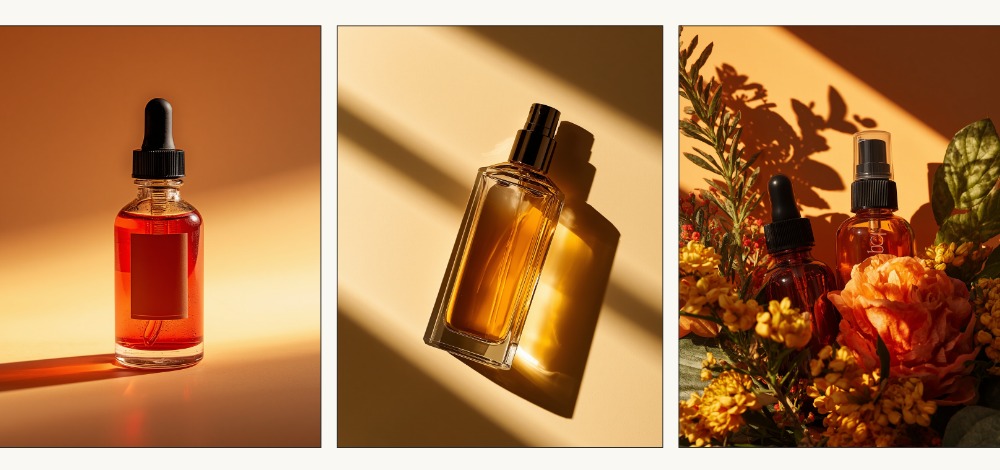
Fran Drescher has talked publicly about the products in her bathroom cabinet for years — a probiotic toothpaste, a marine algae body oil, a spray developed by a wellness doctor. Most coverage stops at the shopping list. We didn’t.
We went through her seven most-cited picks and checked the actual claim behind each one — the ingredient science, the regulatory reality of terms like “non-toxic,” and where a product is doing exactly what it says versus where the marketing has outrun the evidence. One pick, in particular, doesn’t hold up well. Here’s the honest version.
Key takeaways
- The strongest pick of the seven: the peroxide-free hair dye — a real, well-understood formulation difference, not just marketing
- The bigger concern: the manufacturer behind the wellness spray has an FDA warning letter (May 2024) and a separate microbial-contamination recall of its other spray products (Sept 2023) on record — a more concrete issue than the thin human evidence behind its “ancient soil” claims
- “Non-toxic” has no legal or FDA definition — confirmed directly on FDA.gov — it appears on three of the seven products and means whatever the brand decides it means
- The probiotic toothpaste has more real evidence behind it than typical wellness marketing: a 2025 review of 12 clinical trials found it measurably reduced plaque and gum bleeding
Why a celebrity product list is worth a second look
Drescher, 68, has been the face of Laura Geller since 2021 and speaks often about non-toxic living through her cancer-prevention foundation, Cancer Schmancer. In an interview with People, she summed up her approach simply: “you have to embrace what makes you feel great.”
That’s a fine personal philosophy. It is not, on its own, a way to evaluate whether a $68 spray does what its packaging implies. So we separated the two questions: what does she actually use, and which of those claims would survive a dermatologist or a toxicologist in the room.
1. Laura Geller x Fran Drescher Favorites Kit — the capsule logic is sound
Five pieces — primer, kajal liner, mascara, a marbleized blush-and-bronzer, and a dual-ended brush — for $79, with 20% of proceeds going to Cancer Schmancer. The capsule structure itself holds up: a small, well-edited kit outperforms a drawer of impulse buys, which is the same logic behind our own capsule vanity edit. The charitable percentage is a real, quantifiable commitment, not a vague “giving back” line.
Best for: a low-decision everyday face
Verdict: the structure is smart; treat “non-toxic” on the label as marketing language, not a certification (more on that below)
We also found this kit for less than the brand’s $79 direct-site price.
Shop Laura Geller x Fran Drescher Favorites Kit →
2. OSEA Undaria Algae Body Oil — the marine-ingredient claim is real, the “non-toxic” framing is not a standard
Brown algae extracts, including Undaria, do carry real antioxidant activity — a peer-reviewed review in the journal Cosmetics confirms the polyphenol mechanism, and formulations using it have shown measurable improvement in skin antioxidant capacity after 14–28 days of use in published trials. That part of the claim is legitimate. What the brand calls avoiding ingredients “considered to be a carcinogen or toxic in any way” is a formulation choice, not a government-certified standard — confirmed directly on FDA.gov: no such certification exists in U.S. cosmetics regulation.
Best for: dry skin and body, layered under nothing else
Verdict: a genuinely nice oil; ignore the implied safety hierarchy over other formulations
Shop OSEA Undaria Algae Body Oil →
3. Revitin Probiotic Toothpaste — promising science, not yet settled
Revitin was created by Dr. Gerry Curatola, a dentist known for “biological dentistry,” which treats the mouth’s microbiome as connected to overall health. “Biological dentistry” is not among the American Dental Association’s 12 recognized dental specialties. But the science behind probiotic toothpaste itself is more solid than that framing might suggest: a 2025 systematic review and meta-analysis of 12 randomized controlled trials found lactic-acid-bacteria toothpaste produced a significant reduction in plaque and improved gum bleeding at three months, with several trials also linking specific strains to lower levels of cavity-causing bacteria.
Best for: a fluoride-free alternative for people already committed to that choice
Verdict: genuinely more evidence-backed than most wellness marketing — though the same review notes larger, strain-specific trials are still needed before calling it a settled upgrade over standard toothpaste
4. Bumble and bumble. Thickening Dryspun Texture Spray — does what it says
The least controversial pick on the list. Texturizing sprays work by coating strands with fine clays or starches that add friction and grip, which reads as volume. This is well-understood, unglamorous cosmetic chemistry — no claims to fact-check, because the brand isn’t making any beyond “more texture,” which it delivers.
Best for: second-day hair, fine or flat texture
Verdict: straightforwardly good
Shop Bumble and bumble. Thickening Dryspun Texture Spray →
5. Rena Bella Beauty Nourish — a nice indie oil, tested like most indie oils
An antioxidant-rich face oil from a small, founder-led brand. Like most niche personal-care labels, it hasn’t run large independent clinical trials — that’s standard for brands this size, not a red flag specific to this product. The ingredient category (plant oils, antioxidant compounds) is well understood even where the specific formulation hasn’t been independently tested.
Best for: multi-use — face, brows, cuticles, as Drescher herself uses it
Verdict: reasonable, evaluate like any small-batch oil
6. Ion Skin Support Spray — the one worth pausing on, for a different reason than expected
The spray was developed by Dr. Zach Bush, whose ION line (including this one) is made by Biomic Sciences LLC, doing business as ION Intelligence of Nature. The marketing describes “ancient soil” humic and fulvic compounds signaling to gut and skin cells. The real mechanism is more mundane and not entirely unfounded: a regulated humic extract delivering carbon-based signaling molecules, with some in-vitro work and one small published human trial behind it — evidence one independent product review summed up as “scarce at best.” So the science claim is thin, not zero.
The more concrete fact, and the one the original coverage doesn’t mention: the manufacturer received an FDA warning letter in May 2024 citing regulatory violations, and in September 2023 voluntarily recalled several of its other spray products — the Sinus Support line, not this one — for microbial contamination. That isn’t proof the Skin Support spray itself is unsafe. It is a real, checkable data point about the manufacturer’s quality-control history that “developed by a wellness doctor” doesn’t tell you.
Best for: a pleasant hydrating mist, nothing more specific
Verdict: the science claim is thinner than the price implies, but the more useful red flag is the manufacturer’s regulatory record, not the ingredient story
7. ColorOnly Custom Hair Dye — the strongest pick, for an unglamorous reason
Peroxide-free permanent dyes are a real, well-documented formulation category, and this is the one claim on the list with a clean, verifiable mechanism: without peroxide, a dye cannot lift (lighten) hair — it can only deposit color of equal or darker value. That’s a genuine trade-off worth knowing before you buy, and it’s also the one piece of information the original coverage left out entirely.
Best for: covering grays at the same shade or slightly darker, not lightening
Verdict: the most honestly-marketed product of the seven
Where the marketing outpaces the evidence
“Non-toxic” is not a regulated term
The FDA does not define or certify “non-toxic,” “clean,” or “chemical-free” on a cosmetic label. Brands can use these words freely, which means the term tells you about a company’s marketing choices, not about a product’s safety relative to one that doesn’t use the word.
“Developed by a doctor” is not the same as clinically proven
Three of the seven products here trade on a practitioner’s name — a dentist, a wellness doctor. A credential explains who formulated something. It doesn’t substitute for a published clinical trial on the finished product, and the two get conflated constantly in beauty marketing.
None of this is medical or dental advice. For specific skin, dental, or health concerns, talk to a dermatologist or your own dentist.
FAQ: Fran Drescher’s beauty routine
What products does Fran Drescher actually use?
Her most-cited picks span a Laura Geller makeup kit, OSEA algae body oil, Revitin probiotic toothpaste, Bumble and bumble texturizing spray, Rena Bella face oil, an Ion Skin Support spray, and ColorOnly peroxide-free hair dye.
Are “non-toxic” beauty products actually safer?
Not by definition. “Non-toxic” has no FDA or legal standard in cosmetics, so it reflects a brand’s marketing language rather than a verified safety benchmark.
Does probiotic toothpaste actually work?
Better than most wellness marketing claims: a 2025 systematic review of 12 randomized controlled trials found real, measurable benefits — reduced plaque and improved gum bleeding at three months. Researchers still want larger, strain-specific trials before calling it a settled upgrade over standard toothpaste, but the evidence base is genuinely there.
Sources
- Fran Drescher interview and product details — People, “7 Beauty Essentials Fran Drescher Can’t Live Without”
- FDA, “Cosmetics Labeling Regulations” and “FDA Authority Over Cosmetics” (fda.gov) — confirms “non-toxic,” “clean,” and “chemical-free” are undefined, unregulated marketing terms
- National Commission on Recognition of Dental Specialties and Certifying Boards, an agency of the ADA (ncrdscb.ada.org) — list of the 12 ADA-recognized dental specialties
- Systematic review and meta-analysis, “The efficacy of lactic acid bacteria-based toothpaste on oral health” — Frontiers in Oral Health, 2025
- FDA Warning Letter to Biomic Sciences LLC dba ION Intelligence of Nature, CMS #667601 (May 9, 2024)
- FDA recall notice, “Biomic Sciences Issues Voluntary Nationwide Recall of ION Sinus Support, ION Sinus, and Restore Sinus Spray Products Due to Microbial Contamination” (September 2023)
- Peer-reviewed review, “Natural Antioxidants from Plant Extracts in Skincare Cosmetics” — Cosmetics (MDPI)
Weekly finds in The Ritual
Every Sunday we send a curated read on the beauty and wellness claims worth your money — and the ones worth skipping. Subscribe to The Gilt Letter so the edit arrives without you having to hunt for it.
Keep reading: The 9 Best French Pharmacy Skincare Products · The Capsule Vanity · How to Read a Skincare Label Like an Expert
Disclosure: This post contains affiliate links. If you buy through them, THE GILT may earn a commission at no extra cost to you. We only recommend products that meet our evidence and usefulness standards.
Leave a Reply