This article is for informational purposes only and is not a substitute for professional medical advice. Consult your pediatrician about any product or material concerns for your baby. Last updated August 3, 2026.
Nursery shopping puts you face to face with a wall of reassuring words — “non-toxic,” “safe,” “gentle” — most of which aren’t regulated claims at all. In the United States, the Federal Trade Commission’s Green Guides require that any environmental or safety claim be backed by “competent and reliable scientific evidence” before a brand makes it — but the Guides are policy guidance, not a certification, and there is no government body that pre-approves the word “non-toxic” before it goes on a swing tag.
Two labels genuinely mean something specific, because independent certification stands behind them: GOTS and OEKO-TEX Standard 100. A third phrase, fragrance-free, is checkable in a different way — through what a brand is legally required to disclose on an ingredient list. And a fourth category — paint — has a labeling loophole most nursery guides don’t mention at all. Here’s what each one actually requires, and how to check a claim yourself in thirty seconds.
Key takeaways
- “Non-toxic” and “natural” are unregulated marketing words, subject only to general false-advertising rules like the FTC Green Guides
- GOTS = third-party audited organic textiles (95%+ certified organic fiber for the “Organic” label grade, 70%+ for “Made with Organic”)
- OEKO-TEX Standard 100 lab-tests finished textiles against over 1,000 regulated and non-regulated substances, with the strictest limits reserved for baby products
- “Fragrance-free” ≠ “unscented” — under FDA labeling rules, a masking agent can be added without a separate, discernible name on the label
- “Zero-VOC” paint can legally contain up to 5 g/L — and once tinted, colorants can push it far higher; look for Green Seal GS-11 or GREENGUARD Gold instead of the front-of-can word
What GOTS certification actually checks
GOTS (Global Organic Textile Standard) is a textile standard, not a marketing term. According to the official GOTS key features page, the standard offers two label grades: “Organic,” which requires a minimum of 95% certified organic fiber, and “Made with Organic Materials,” which requires a minimum of 70% certified organic fiber. Both grades are audited against the same processing, environmental, and social criteria — the difference is only the fiber percentage.
Crucially, GOTS doesn’t just check the raw cotton. Per the official “how the system works” page, certification covers every stage after raw fiber production — first processing, manufacturing, and trading — and every company in that chain must itself be certified by an approved, independent certification body, with annual on-site audits. That includes restrictions on the chemical inputs used in dyeing and finishing, wastewater treatment standards, and labor criteria, not just a fiber percentage on a swing tag.
A GOTS-certified crib sheet is a claim backed by a paper trail — a license number tied to a specific certifying body — and you can verify any specific product or supplier in the official GOTS public database. If a brand describes a product as “GOTS certified” but can’t produce a license number, that claim cannot be verified and shouldn’t be taken at face value.
OEKO-TEX Standard 100: the safety floor beneath GOTS
Where GOTS is about organic fiber content and supply-chain ethics, OEKO-TEX Standard 100 is narrower and more universal: it doesn’t require organic fiber at all, but it tests the finished textile — “every thread, button and accessory” — against a list of more than 1,000 potentially harmful substances, calibrated to how much skin contact the product will have.
OEKO-TEX organizes products into four classes, and nursery shoppers should know Class 1 by name: it covers “products for babies and children up to 3 years, such as diapers,” and it carries the strictest limit values of any class. Bed linens fall under the more moderate Class 2; jackets and other non-skin-contact items fall under Class 3; and home décor without any bodily contact is Class 4. The certification is also reviewed against major chemical regulations, including the EU’s REACH directive and the U.S. Consumer Product Safety Improvement Act (CPSIA), with limit values re-evaluated at least once a year.
In practice: OEKO-TEX tells you a finished crib sheet passed a substance-safety test; GOTS tells you the fiber was organically grown and the whole production chain met environmental and social criteria. A product can carry both marks, and for nursery textiles that see hours of skin contact, that’s the strongest combination available.
Why formaldehyde and heavy metals matter in nursery textiles
These aren’t abstract concerns. U.S. federal law already restricts specific substances in children’s products. Under the Consumer Product Safety Improvement Act, the Consumer Product Safety Commission (CPSC) caps lead content in children’s apparel and sleepwear at 100 parts per million, and at 90 ppm for any painted or coated surface. Separately, children’s toys and child-care articles are capped at 0.1% for six specific phthalates (DEHP, DBP, BBP, DINP, DIDP, and DnOP), chemicals once common as plastic softeners. Some states go further: the CPSC’s own guide notes that Minnesota bans the sale of certain children’s products with intentionally added formaldehyde, or ingredients that break down into it, for kids age 8 and under.
Independent research backs up why this matters specifically for sleep products. A 2014 study published in Environmental Science & Technology and covered by researchers measured volatile organic compound (VOC) emissions from twenty new and used crib mattresses, finding that all of them emitted VOCs, with new mattresses releasing more than used ones, and concentrations in an infant’s breathing zone measurably higher than ambient room air. The study’s authors note that infants spend the majority of their time sleeping in close, prolonged contact with these materials — which is exactly the kind of exposure that certifications like OEKO-TEX’s Class 1 limits are designed to reduce.
What about paint and air quality?
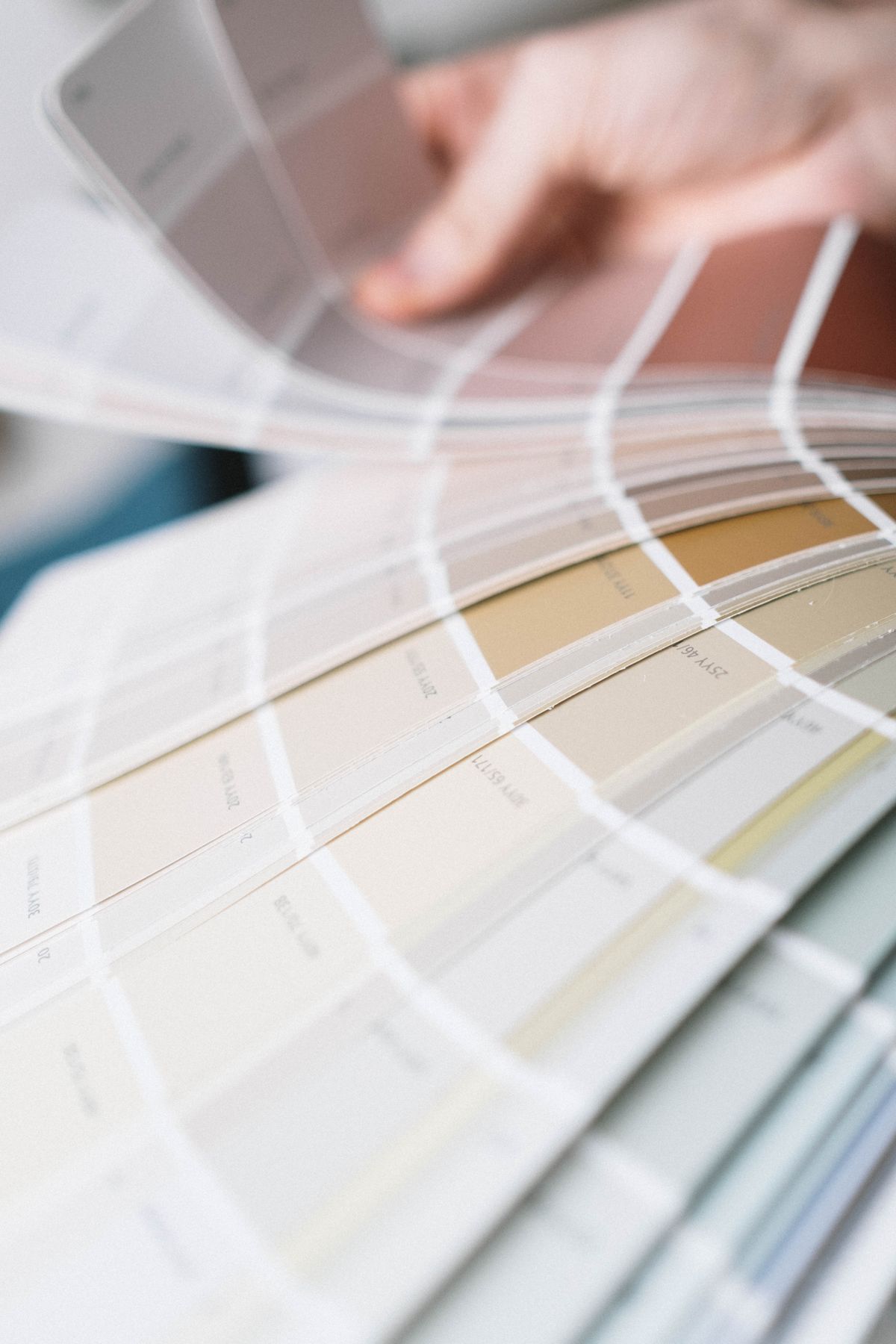
This is the one category most nursery guides gloss over, and it has its own version of the “non-toxic” problem. The EPA does regulate VOC content in paint — but “zero-VOC” is allowed to mean up to 5 grams per liter, not literally zero. The bigger catch: that number reflects the base paint before it’s tinted. Colorants added at the store carry their own VOCs, and a base labeled “zero-VOC” can end up well above that threshold once mixed to your chosen color — sometimes by a wide margin.
Two independent certifications close that gap. Green Seal GS-11 restricts colorant VOCs specifically — under its standard, any colorant added to a certified paint can’t push the finished product more than 50 grams per liter above the category limit. GREENGUARD Gold (run by UL) certifies low chemical emissions from the finished, dried product itself, and is the standard most often cited for schools and childcare settings. Neither is required by law. Both are checkable the same way GOTS and OEKO-TEX are: look for the mark, not the marketing word.
“Fragrance-free” vs “unscented” — not the same thing
These two phrases aren’t interchangeable, and the difference comes down to how U.S. cosmetic and textile-adjacent labeling actually works. The FDA’s own cosmetics labeling guide explains that a “masking agent” — an ingredient added specifically to cover up an unwanted base odor without introducing a noticeable scent of its own — can be declared under the umbrella term “fragrance,” or, if present at an “insignificant level,” may not need to be declared at all as an “incidental ingredient.”
- “Unscented” can still legally contain a masking fragrance chemical added to cancel out a base smell — the FDA’s own guidance permits masking agents to be folded into the general “fragrance” declaration, or omitted entirely if minimal
- “Fragrance-free” generally means no fragrance ingredients, including masking agents, were added at all
Because “fragrance” on an ingredient list can legally bundle multiple undisclosed compounds under one word — the FDA guide confirms fragrance and flavor compounds “may be declared in descending order of predominance as ‘fragrance’ and ‘flavor'” rather than by individual chemical name — a genuinely fragrance-free product removes the whole category, not just the smell. Neither the FDA nor any other U.S. regulator formally defines “unscented” or “fragrance-free” as legal terms, which is exactly why the ingredient list, not the front-of-package word, is the more reliable read.
The Gilt Nursery Checklist
Not everything needs a certification — a picture frame doesn’t. This is where scrutiny is actually worth spending, in order of skin contact and time exposed:
- Mattress & sheets: GOTS “Organic” grade (95%+ fiber) plus OEKO-TEX Standard 100 Class 1; for latex mattresses, look for GOLS (Global Organic Latex Standard) instead
- Paint: Green Seal GS-11 or GREENGUARD Gold certified — not just a “zero-VOC” label, which can rise after tinting
- Crib and furniture: GREENGUARD Gold certified for low chemical emissions from the finished piece
- Diapers & wipes: read the actual ingredient list rather than the front-of-package word; TCF (totally chlorine-free) processing avoids the dioxin byproducts of older bleaching methods
- Everything else — toys, décor, storage: reserve your certification-checking energy for what touches skin for hours, not what sits on a shelf
You don’t need to memorize every certification body. You need to know which few label claims are actually checkable — and check them.
FAQ: non-toxic nursery shopping
Is “non-toxic” a regulated claim?
No. Like “clean” and “natural” in skincare, “non-toxic” has no legal definition on nursery products in the U.S. The FTC’s Green Guides require that any such claim be substantiated by competent scientific evidence if challenged, but no agency pre-certifies the word itself before a product ships. Certification marks (GOTS, OEKO-TEX) are the checkable alternative.
What is OEKO-TEX and how is it different from GOTS?
OEKO-TEX Standard 100 tests the finished textile for harmful substances, with the strictest limits (Class 1) applied to baby products; GOTS additionally requires a minimum organic-fiber percentage (70% or 95%, depending on label grade) and audits the entire production chain, including labor and environmental criteria. OEKO-TEX is a substance-safety floor; GOTS is a stricter, organic-specific standard that also covers safety-adjacent chemical inputs. Both beat an unverified “natural.”
Is “zero-VOC” paint actually zero?
Not necessarily. The EPA’s own threshold allows “zero-VOC” paint to contain up to 5 grams per liter, and that figure applies to the untinted base — the colorants mixed in at the store can add VOCs the label never accounts for. Green Seal GS-11 and GREENGUARD Gold are the two certifications that address this directly, rather than relying on the front-of-can word.
Does everything in a nursery need to be organic or certified?
No — prioritize what touches skin for hours: sheets, sleepwear, swaddles, and the mattress. Independent research on VOC emissions from crib mattresses is a useful reminder of why the mattress and its cover are worth the extra scrutiny. A picture frame doesn’t need a certification; the crib sheet arguably does.
Are formaldehyde and heavy metals actually restricted by law?
Yes, to a degree. U.S. federal law under the CPSIA caps lead at 100 ppm in children’s apparel and restricts six phthalates in toys and child-care items to 0.1%. Formaldehyde restrictions are more patchwork — some states, like Minnesota, ban it outright in certain children’s products, while certifications like OEKO-TEX and GOTS apply their own, often stricter, limits across the board regardless of state law.
The same label-reading logic works for your own shelf: How to Read a Skincare Label Like an Expert. For the full edit every Sunday, subscribe to The Gilt Letter.
Sources & Data
- Global Organic Textile Standard, “Key Features” — global-standards.org/our-standards/gots/key-features (primary)
- Global Organic Textile Standard, “Labelling” — global-standards.org/our-standards/gots/labelling (primary)
- Global Organic Textile Standard, “How the System Works” — global-standards.org/our-standards/gots/how-it-works (primary)
- GOTS Public Database — global-standard.org (primary)
- OEKO-TEX, “STANDARD 100” — oeko-tex.com/en/our-standards/oeko-tex-standard-100 (primary)
- U.S. FDA, “Cosmetics Labeling Guide” — fda.gov/cosmetics/cosmetics-labeling-regulations/cosmetics-labeling-guide (primary)
- U.S. Consumer Product Safety Commission, “A Guide to United States Apparel and Household Textiles Safety Requirements” — cpsc.gov/s3fs-public/Guide-to-US-Apparel-and-Household-Textiles.pdf (primary)
- Federal Trade Commission, “Guides for the Use of Environmental Marketing Claims” (Green Guides) — ftc.gov/sites/default/files/attachments/press-releases/ftc-issues-revised-green-guides/greenguides.pdf (primary)
- Environmental Science & Technology / PubMed, “Infant exposure to emissions of volatile organic compounds from crib mattresses” (2014) — pubmed.ncbi.nlm.nih.gov/24548111 (secondary)
- American Coatings Association, “Guidance for Developing Zero-VOC, Emissions and Environmental Marketing Claims” — paint.org guidance document (primary, industry)
- Green Seal, GS-11 paint standard colorant VOC restriction (secondary summary)
Leave a Reply